How do I get my product or business shown in ChatGPT?
Where ChatGPT's recommendations come from, the crawler setting that quietly rules many sites out, and the work that moves the answer over time.

Short answer: make sure ChatGPT's search crawler can read your site, publish pages that answer buyer questions plainly and specifically, and get your product described accurately on the sites ChatGPT already trusts — reviews, comparisons, directories, press. There is no form to fill in that makes it recommend you.
ChatGPT answers from two sources. One is what the model absorbed in training, which is fixed until the next model and which you cannot edit. The other is live search: when it browses, it reads current pages and cites them. The second is where most of the practical opportunity is, because it responds to changes you make now.
The steps below are ordered by how often they turn out to be the problem.
At a glance
Let the right crawler in
OpenAI's search crawler is OAI-SearchBot, separate from GPTBot, which collects training data. Blocking one does not block the other. Check which your robots.txt allows.
Answer the actual question
Buyers ask ChatGPT "best X for Y". Pages that say plainly who the product is for, what it costs and how it compares are far easier to quote than brand copy.
Be described elsewhere
Recommendations lean heavily on third-party sources: review sites, comparison articles, forums, directories. If nobody else describes you, the model has little to go on.
Measure over weeks
Answers change between runs. Track a fixed set of buyer questions over time rather than reacting to one conversation.
First, check whether ChatGPT can see you at all
Open yourdomain.com/robots.txt. If it blocks OAI-SearchBot, or blocks all crawlers, ChatGPT's search cannot read your pages and will not cite them. OpenAI documents its crawlers separately: OAI-SearchBot for search, GPTBot for training data, and ChatGPT-User for pages fetched when a user asks. You can block training and still allow search, and many businesses that want visibility but not training use do exactly that.
Some security and CDN services block AI crawlers by default. If your site sits behind one, check its bot settings as well as robots.txt — this is the most common reason a site with no robots.txt problem still never appears.
Then check what a crawler actually receives. Several AI crawlers do not run JavaScript. If your product descriptions, prices or reviews only appear after scripts load, they may be invisible to the systems you are trying to reach.
Write pages ChatGPT can quote
People ask ChatGPT specific questions: "best CRM for a ten-person agency", "quiet dishwasher under $1,000", "accountant in Toronto for freelancers". It recommends products it can describe confidently in those terms. A homepage full of adjectives gives it nothing to work with.
Say, in plain sentences, who the product is for, what it does, what it costs or how pricing works, where it is available and how it differs from the obvious alternatives. Put each answer near the top of its own section so it can be lifted without the paragraphs around it. Name the business and the product in those passages; a sentence that only says "our solution" loses its subject when quoted.
Honest comparison pages help, including ones that say when a competitor is the better fit. They answer exactly the question buyers are asking, and a page that admits trade-offs reads as more trustworthy to a person and to a model.
Get described accurately elsewhere
When ChatGPT recommends products, it leans heavily on what other sources say. Review platforms, industry comparison articles, well-known directories, Reddit and forum threads, and press coverage all carry weight, and often more weight than your own site, because they are independent of you.
Audit what those sources currently say. Outdated pricing on a comparison site, a discontinued product still listed, or a directory with the wrong category all feed into answers. Correct what you can, ask for updates where you cannot, and earn new coverage the slow way: by being worth writing about and by asking satisfied customers for genuine reviews.
What does not work: paying for fake reviews, seeding forums with sock-puppet recommendations, or hiding instructions to AI models in your pages. Platforms detect and remove the first two, and engines treat the third as manipulation.
How long it takes, and how to tell
Changes to your own site can show up in ChatGPT's search-based answers within weeks, once the pages are recrawled. Changes to what third parties say take longer, because the coverage has to exist before it can be found. Changes to the model's built-in knowledge wait for a new model.
To tell whether anything is working, write down ten to twenty questions a real buyer would ask, run them in ChatGPT on a regular schedule, and record which brands are named. Do the same in Perplexity, Gemini and Google's AI Overviews, because a business that improves in one usually improves in the others. One conversation proves very little; the trend across a fixed set of questions is the signal.
What you can influence depends on which source the answer comes from. This is the simplest useful model of it.
| Source | What it is | What you can do |
|---|---|---|
| Training data | What the model learned before its cut-off date | Nothing directly. It changes only when a new model is trained, and reflects what the web said about you before then |
| Live search results | Pages ChatGPT retrieves and cites when it searches | Allow OAI-SearchBot, make pages crawlable without JavaScript, answer questions plainly |
| Third-party pages | Reviews, comparisons, directories, forums and press that mention you | Earn accurate coverage; correct wrong listings; get genuine reviews |
| Merchant product data | Structured product information for shopping-style answers | Keep product data accurate and complete; follow OpenAI's current merchant documentation |
OpenAI's shopping and merchant features have changed several times since launch. Check their current documentation rather than relying on any summary, including this one.
Where this work has already shipped
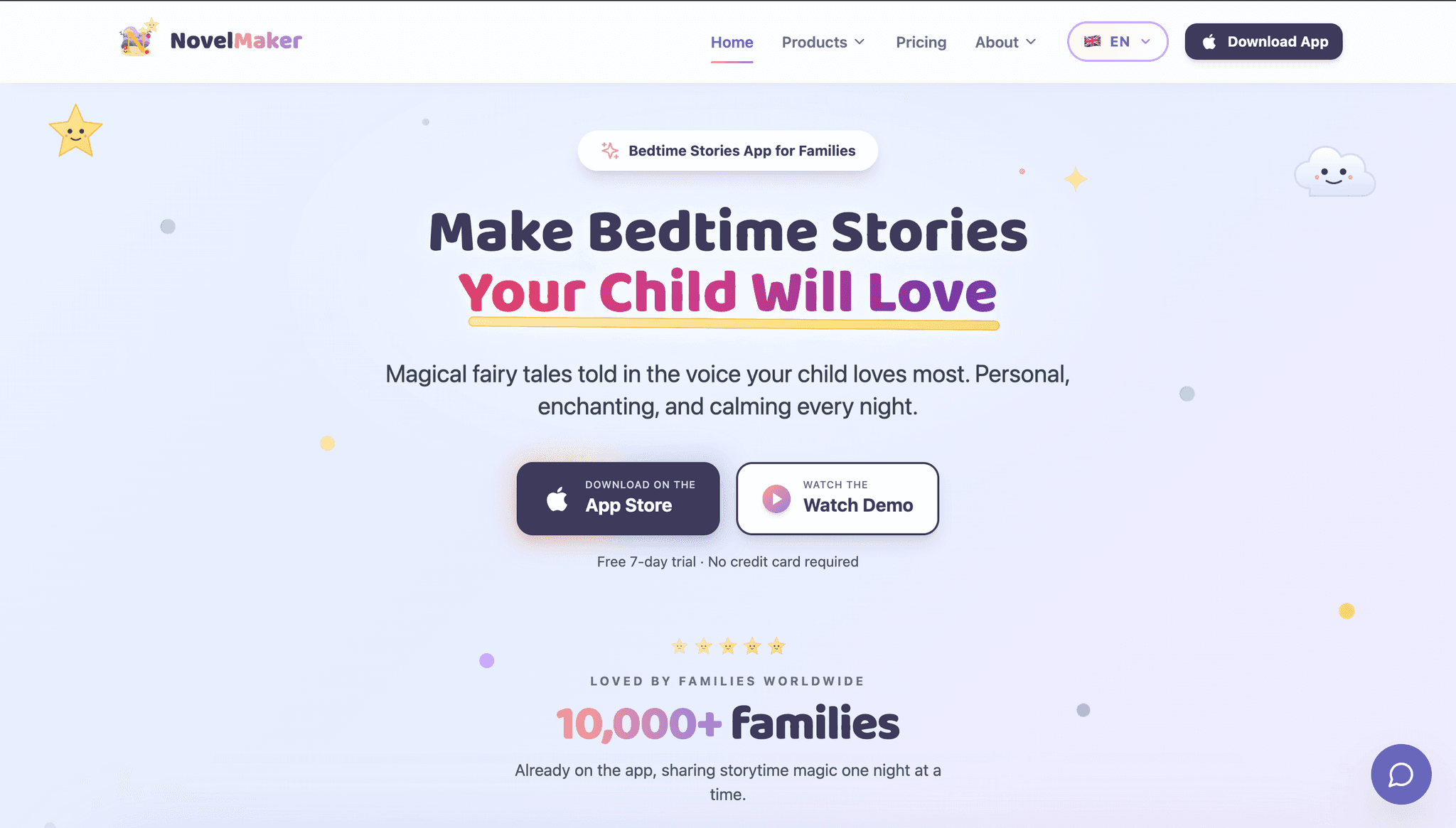
0→1
category made discoverable
A brand-new category, made findable in the answer
NovelMaker case study
How do I get my product or business shown in ChatGPT?: common questions
Can I pay OpenAI to have ChatGPT recommend my product?
Not in the ordinary answers. Recommendations in ChatGPT's responses are not sold as placements. If OpenAI offers advertising in a given market, ads are a separate, labelled product and do not change what the model recommends in its own words. Check OpenAI's current documentation, as its commercial features change frequently.
Should I block GPTBot to protect my content?
That is a business decision, and it does not have to cost you visibility. GPTBot collects training data; OAI-SearchBot powers ChatGPT's search. OpenAI treats them separately, so you can block GPTBot and still allow OAI-SearchBot. Blocking both, or blocking all bots, removes you from ChatGPT's live search results.
Why does ChatGPT recommend my competitor and not me?
Usually because more sources describe the competitor clearly and consistently. Check whether ChatGPT's crawler can reach your site, whether your pages state plainly who you serve and what you offer, and how often independent review sites, comparison articles and directories mention you compared with them. The gap is normally in third-party coverage.
Does ranking on Google help me show up in ChatGPT?
It helps indirectly: a page that ranks well is usually crawlable, clear, trusted and referenced by other sites, and those are the same qualities that make it retrievable for AI answers. But the two lists aren't identical, and a business can rank well on Google and still go unmentioned in ChatGPT, particularly if third-party coverage is thin.
When AI gets your company wrong
What AI SEO means
SEO for ecommerce
AI SEO services
Related services
+4
Case studies using this work
+1
Further reading from the journal
+3
Want to be the brand the models name?